Siebdruck auf Textilien: Verfahren, Kosten und Grenzen
Das Wichtigste in Kürze
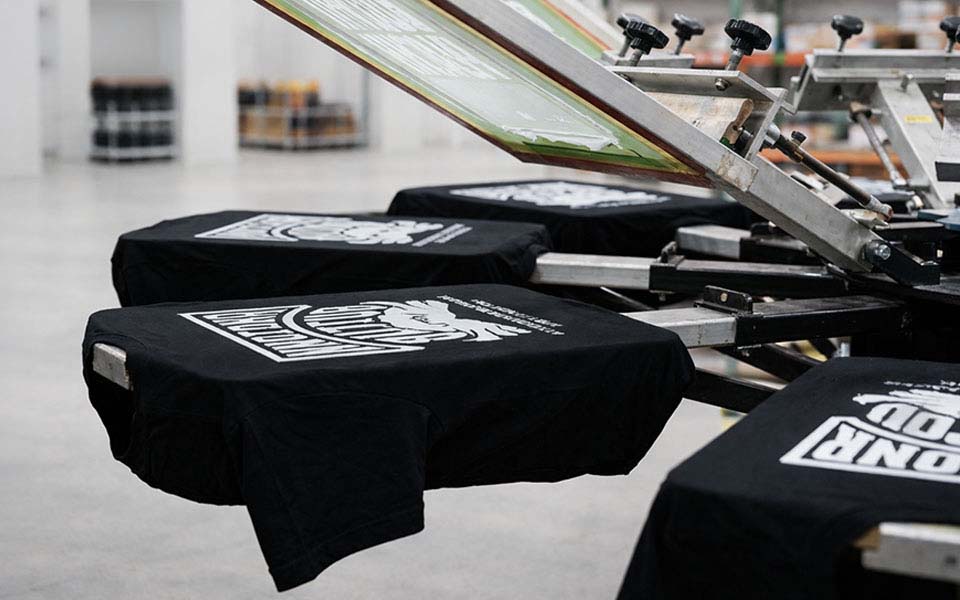
- Prinzip: Die Farbe wird durch ein feinmaschiges Sieb auf das Textil gedrückt – pro Druckfarbe ein eigenes Sieb.
- Mindestauflage: 50 Stück. Günstiger als Digitaldruck wird Siebdruck allerdings erst ab rund 100 Stück.
- Preis: ein einfarbig bedrucktes Premium Shirt kostet 9,87 € bei 50 Stück und 5,52 € bei 1.000 Stück (brutto).
- Farben: bis zu neun Vollton-Farben, nach dem Pantone-System angemischt.
- Positionen: Vorderseite, Rückseite sowie Ärmel links und rechts.
- Grenze: bei kleinen Auflagen, vielen Farben oder Fotomotiven ist Digitaldruck die bessere Wahl.
Was ist Siebdruck?
Siebdruck ist eines der bewährtesten Druckverfahren in der Textilveredelung und besonders bei größeren Auflagen eine sehr gute Wahl. Das Verfahren eignet sich vor allem für T-Shirts, Sweatshirts, Hoodies und Baumwolltaschen mit klaren Motiven, kräftigen Farben und hoher Haltbarkeit.
Seine Stärken spielt der Siebdruck vor allem dann aus, wenn größere Stückzahlen produziert werden sollen und das Motiv aus klar getrennten Farben besteht. Durch die hohe Deckkraft und den gleichmäßigen Farbauftrag lassen sich sehr präzise und langlebige Druckergebnisse erzielen.
Wann ist Siebdruck sinnvoll?
Siebdruck lohnt sich vor allem bei:
- größeren Auflagen
- Motiven mit klaren Vollfarben
- Logos, Schriftzügen und grafischen Designs
- Druckprojekten mit hoher Anforderung an Haltbarkeit und Farbintensität
- Textilien, die regelmäßig getragen, gewaschen oder im Arbeitsalltag genutzt werden
Je höher die Auflage, desto wirtschaftlicher wird das Verfahren. Das liegt daran, dass für den Siebdruck technische Vorarbeiten notwendig sind, etwa die Erstellung von Sieben. Diese Einrichtungskosten verteilen sich bei größeren Mengen auf mehr Produkte, wodurch der Stückpreis sinkt.
Bei Prinovia liegt die Mindestauflage für Siebdruck bei 50 Stück.
Preis direkt berechnen: Auf der Seite Siebdruck auf T-Shirts wählst du Produkt, Menge und Farben und siehst den Endpreis sofort, ohne Angebotsanfrage.
Wie funktioniert Siebdruck?
Beim Siebdruck wird die Druckfarbe mithilfe einer Schablone durch ein feinmaschiges Sieb direkt auf das Textil aufgetragen. Für jede Druckfarbe wird ein eigenes Sieb benötigt. Die Farben werden nacheinander gedruckt und anschließend durch Hitze dauerhaft fixiert.
Das Grundprinzip ist einfach: Jede Farbe des Motivs wird separat vorbereitet und einzeln auf das Textil gebracht. Dadurch entsteht ein deckender, gleichmäßiger und sehr haltbarer Druck.
Die wichtigsten Schritte im Überblick:
- Das Motiv wird in seine einzelnen Druckfarben zerlegt
- Für jede Farbe wird ein eigenes Sieb erstellt
- Die Farben werden nacheinander auf das Textil gedruckt
- Anschließend wird der Druck durch Hitze getrocknet und fixiert
Bei farbigen Textilien wird zusätzlich eine weiße Grundierung eingesetzt, damit die Farben eine optimale Deckkraft erreichen. Diese wird in der Kalkulation automatisch berücksichtigt.
Welche Vorteile bietet Siebdruck?
Siebdruck ist besonders dann stark, wenn Langlebigkeit, Farbwirkung und Wirtschaftlichkeit bei größeren Mengen wichtig sind.
Zu den wichtigsten Vorteilen gehören:
- sehr gute Haltbarkeit
- hohe Waschbeständigkeit
- kräftige und deckende Farben
- saubere Darstellung von Volltonflächen
- wirtschaftlich bei größeren Auflagen
- Sonderfarben wie Neon- oder Metallic-Töne möglich
- gute Eignung für Firmenbekleidung, Vereinskleidung, Eventtextilien und Merch
Vor allem bei Motiven mit klaren Farbflächen erzielt Siebdruck sehr gleichmäßige und hochwertige Ergebnisse.
Für welche Motive ist Siebdruck geeignet?
Am besten eignet sich Siebdruck für:
- Logos
- Schriftzüge
- Motive mit klar getrennten Farben
- grafische Designs mit Volltonflächen
- größere Farbflächen
- einfache bis mittelkomplexe Layouts
Je klarer die Farben voneinander abgegrenzt sind, desto besser lässt sich das Motiv im klassischen Siebdruck umsetzen.
Für komplexere Motive gibt es zusätzlich Sonderformen des Siebdrucks:
- Rasterdruck für einfache Abstufungen und Graustufen
- Separationsdruck für Fotos, Farbverläufe und aufwendigere Motive
Diese Varianten sind technisch möglich, aber deutlich aufwendiger in der Vorbereitung. Für kleinere und mittlere Auflagen ist bei fotorealistischen oder sehr komplexen Motiven deshalb häufig Digitaldruck die sinnvollere Alternative.
Welche Farben sind im Siebdruck möglich?
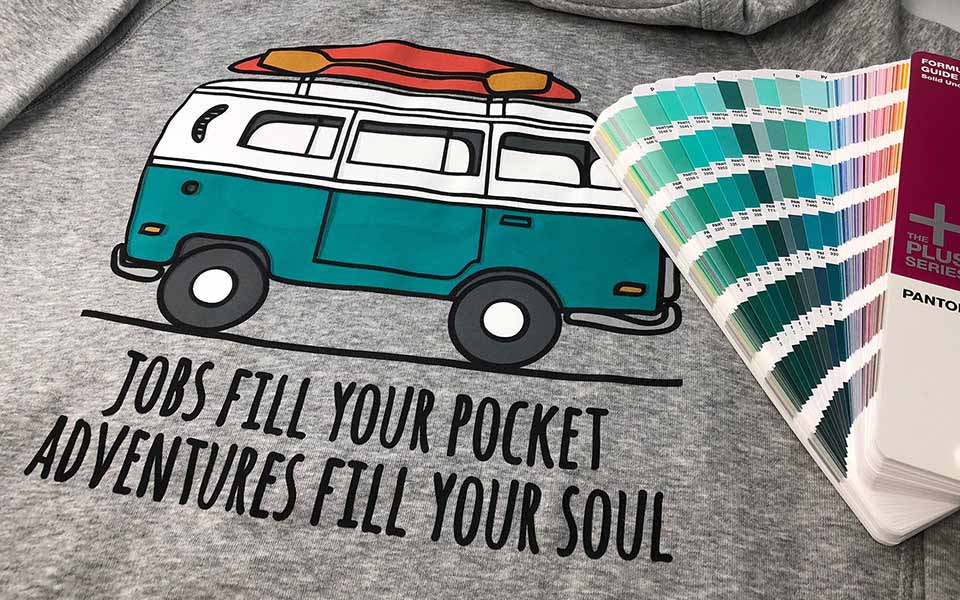
Im Siebdruck werden die Farben nach dem Pantone-System angemischt. Dadurch lassen sich sehr viele Farbtöne präzise umsetzen. Auch Sonderfarben wie Neon oder Metallic können je nach Motiv realisiert werden.
Wichtig ist: Für jede Druckfarbe wird ein eigenes Sieb benötigt. Mit steigender Anzahl an Druckfarben steigt deshalb auch der technische Aufwand.
Pantone-Farben lassen sich besonders auf weißen Textilien sehr farbnah umsetzen. Auf farbigen Textilien kann die Wirkung je nach Material und Untergrund leicht abweichen.
Wenn keine konkreten Pantone-Werte angegeben werden, orientiert sich die Farbauswahl an den Werten in der Druckdatei.
Welche Auflagen sind sinnvoll?
Siebdruck ist vor allem für größere Mengen gedacht. Der größte Preisvorteil entsteht, wenn sich die Einrichtungskosten auf viele Produkte verteilen.
Als grobe Orientierung gilt:
- ab 50 Stück möglich
- ab mittleren bis höheren Auflagen besonders wirtschaftlich
- je einfacher das Motiv und je höher die Menge, desto attraktiver wird das Verfahren
Für kleine Mengen oder häufig wechselnde Motive ist Digitaldruck oft flexibler.
Was kostet Siebdruck?
Der Stückpreis hängt an vier Größen: Textil, Auflage, Anzahl der Druckfarben und Anzahl der Druckpositionen. Ein Beispiel aus unserem Kalkulator – Premium Shirt, einfarbiger Frontdruck, Bruttopreise inklusive Textil und Druck, Stand September 2026:
- 50 Stück: 9,87 € pro Shirt
- 100 Stück: 7,76 € pro Shirt
- 250 Stück: 6,53 € pro Shirt
- 1.000 Stück: 5,52 € pro Shirt
Zwischen 50 und 1.000 Stück fällt der Stückpreis also um rund 44 Prozent, ohne dass sich am Produkt etwas ändert. Der Grund ist die Einrichtung: Farbseparation und Siebherstellung fallen einmal pro Auftrag an, der Druckvorgang selbst pro Teil.
Dieselbe Mechanik gilt für die Farbanzahl. Eine zweite Druckfarbe kostet beim Premium Shirt bei 50 Stück 1,28 € pro Teil, bei 1.000 Stück nur noch 12 Cent. Bei kleinen Auflagen lohnt es sich deshalb, das Motiv auf ein bis zwei Farben zu reduzieren – ab etwa 500 Stück fällt die Farbanzahl preislich kaum noch ins Gewicht.
Wichtig für die Verfahrenswahl: Gegenüber Transferdruck (DTF) rechnet sich Siebdruck erst ab rund 100 Stück. Bei 50 Shirts liegt DTF mit 9,75 € sogar knapp unter dem Siebdruck, bei 100 Stück dreht sich das Verhältnis auf 7,76 € zu 8,82 € zugunsten des Siebdrucks.
Den Preis für eure konkrete Auflage berechnet ihr direkt auf der Seite Siebdruck auf T-Shirts.
Welche Druckgrößen sind möglich?
Die technisch maximale Standarddruckgröße im Siebdruck beträgt 30 x 40 cm. Größere Druckflächen können je nach Produkt und Motiv auf Anfrage möglich sein.
Wichtig ist jedoch: In der Praxis ist häufig nicht die Druckplatte, sondern das jeweilige Textil selbst der begrenzende Faktor.
Zu beachten ist unter anderem:
- Kindershirts lassen sich erst ab Größe 140 in etwa DIN A3 bedrucken
- bei Damen-Shirts in S und M ist die Druckhöhe häufig geringer
- Hoodies können auf der Vorderseite nicht über die Bauchtasche hinweg bedruckt werden
- Baumwolltaschen haben je nach Format ebenfalls begrenzte Maximalflächen
Wenn innerhalb eines Auftrags unterschiedliche Produkte kombiniert werden, muss die Druckgröße einheitlich umsetzbar sein. Gerade bei sehr kleinen und sehr großen Textilien innerhalb derselben Bestellung kann das in der Praxis einschränkend sein.
Welche Druckpositionen sind möglich?
Im Siebdruck stehen vier Druckpositionen zur Verfügung:
- Vorderseite
- Rückseite
- Ärmel links
- Ärmel rechts
Welche davon verfügbar sind, hängt vom Produkt ab: Bei T-Shirts sind alle vier möglich, bei Hoodies nur Vorder- und Rückseite. Die Ärmelfläche ist mit rund 10 x 10 cm deutlich kleiner als die Hauptfläche. Jede Position ist ein eigener Druckvorgang und wird separat kalkuliert.
Bei Taschen sind je nach Modell Vorder- und Rückseite bedruckbar.
Welche Textilien eignen sich für Siebdruck?
Siebdruck eignet sich besonders gut für Textilien mit hohem Baumwollanteil. Dazu gehören unter anderem:
- T-Shirts
- Sweatshirts
- Hoodies
- Stofftaschen und Baumwollbeutel
- viele Formen von Vereins- und Teamkleidung
Das Verfahren ist besonders beliebt, wenn robuste, langlebige Drucke gefragt sind, etwa bei Firmenbekleidung, Eventtextilien, Merch oder Vereinsbekleidung.

Welche Anforderungen gelten für die Druckdatei?
Die Anforderungen an die Druckdatei hängen vom Motiv ab.
Für einfache, einfarbige Drucke kann oft auch eine hochwertige Pixelgrafik ausreichen. Bei mehrfarbigen oder komplexeren Motiven ist eine Vektordatei in der Regel die bessere Grundlage, weil Farben sauber getrennt und technisch präziser vorbereitet werden können.
Grundsätzlich gilt:
- für einfache Motive sind hochwertige Pixelgrafiken oft ausreichend
- für mehrfarbige Motive ist eine Vektordatei empfehlenswert
- bei Verläufen oder komplexen Motiven ist eine saubere Druckvorlage besonders wichtig
- je besser die Datei, desto besser die technische Umsetzbarkeit
Detaillierte Informationen dazu findest du im Bereich Motivanforderungen.
Gibt es auch Nachteile oder Einschränkungen?
Siebdruck bietet viele Vorteile, ist aber nicht für jedes Projekt automatisch die beste Lösung.
Zu beachten ist:
- wirtschaftlich vor allem bei höheren Auflagen
- für jede Farbe wird ein eigenes Sieb benötigt
- mit steigender Farbanzahl steigt der Aufwand
- Fotos und Verläufe erfordern Rasterdruck oder Farbseparation
- bei kleinen Auflagen ist Digitaldruck oft flexibler
- Druckgrößen sind nicht beliebig variabel innerhalb eines Auftrags
Gerade bei kleineren Mengen oder sehr komplexen Motiven mit vielen Farben und Verläufen kann ein anderes Druckverfahren besser geeignet sein.
Wann ist Digitaldruck die bessere Alternative?
Digitaldruck ist oft die passendere Wahl, wenn:
- kleinere oder mittlere Auflagen benötigt werden
- das Motiv viele Farben enthält
- Farbverläufe oder Fotos gedruckt werden sollen
- variable Motivgrößen innerhalb eines Auftrags benötigt werden
- keine klassische Sieberstellung sinnvoll ist
Siebdruck und Digitaldruck ergänzen sich deshalb gut. Welches Verfahren besser passt, hängt immer von Motiv, Auflage und Anforderung ab.
Das Wichtigste im Überblick
- Siebdruck ist besonders für größere Auflagen geeignet
- das Verfahren überzeugt durch hohe Haltbarkeit und starke Farbwirkung
- ideal für Logos, Schriftzüge und Motive mit klaren Vollfarben
- Mindestauflage bei Prinovia: 50 Stück, wirtschaftlich ab rund 100 Stück
- für jede Druckfarbe wird ein eigenes Sieb benötigt
- Sonderfarben wie Neon und Metallic sind möglich
- maximale Standarddruckgröße: 30 x 40 cm
- vier Druckpositionen: Vorderseite, Rückseite, Ärmel links und rechts
- bei Fotos und Verläufen sind Rasterdruck oder Farbseparation nötig
- für kleinere Auflagen und komplexe Motive ist Digitaldruck oft die bessere Wahl