Digital transfer printing (DTF)
What is DTF printing?
DTF stands for Direct-to-Film. In this printing process, the motif is first printed onto a special transfer film and then transferred onto the textile. DTF printing is particularly suitable for detailed, color-intensive motifs and can be used on many different materials.
The process is especially interesting when motifs need to be implemented flexibly on different types of fabrics or contain very fine details.
How does DTF printing work?
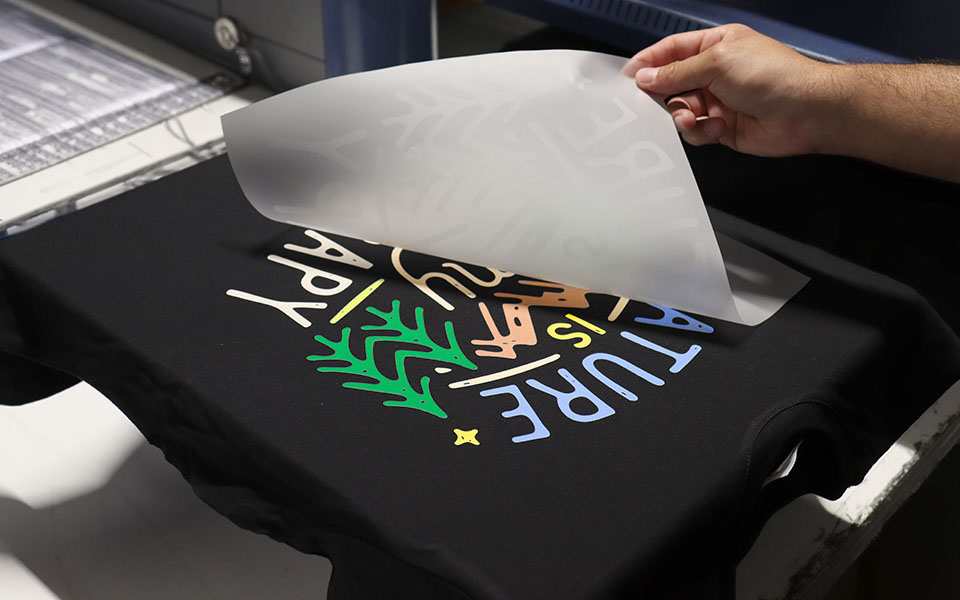
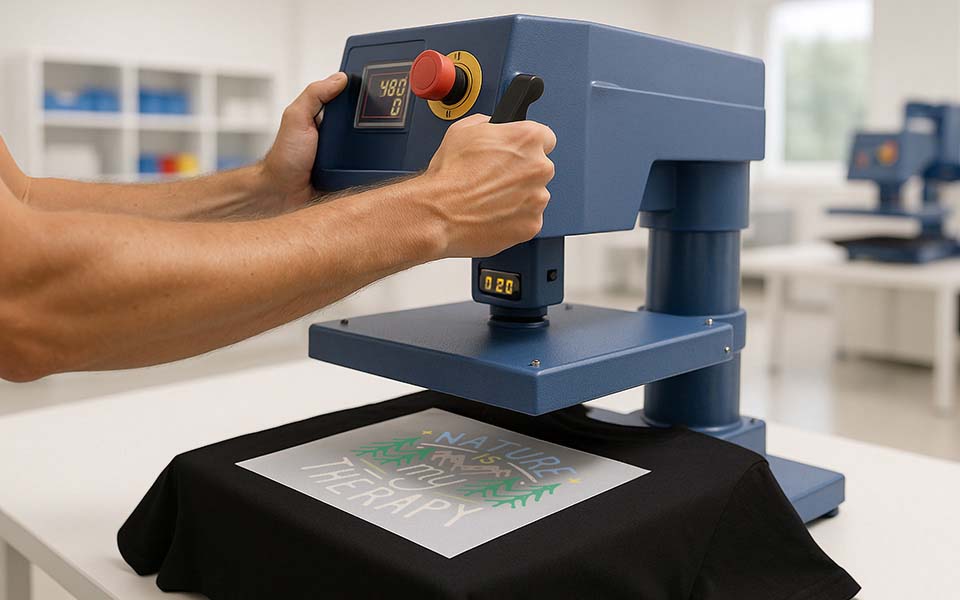
In DTF printing, the motif is first printed in reverse on a transfer film. Then, a fine adhesive powder is applied to the still wet ink. This is fixed by heat before the motif is transferred onto the textile with a transfer press.
After the pressing process, the film is peeled off. On the textile, the printed motif remains as a durable and washable transfer layer.
The process enables:
- vivid colors
- clear contours
- a clean detail reproduction
- good adhesion on different materials

For which motifs is DTF printing suitable?
DTF printing is especially suitable for motifs with:
- small texts
- fine lines
- clear contours
- many details
- color-intensive elements
The process is especially sensible when a motif needs to be transferred precisely and high flexibility in material selection is required.
DTF can also be a good solution for more complex designs with many small image elements.
For which materials is DTF printing suitable?
A significant advantage of DTF printing is its high material variety. The process can be applied to many types of fabrics and is therefore particularly flexible.
DTF is suitable, among others, for:
- cotton
- polyester
- blended fabrics
- nylon
Especially with materials that can be more demanding in traditional textile printing, DTF often offers a practical alternative.
When is DTF printing less suitable?
DTF is not automatically the best choice for every motif. The process is generally less suitable for:
- very large, almost full-surface motifs
- designs with dense, closed color areas
- prints where a particularly soft, fabric-like feel is a priority
If a very soft touch of the print is desired, another printing process may fit better depending on the product and motif.
Advantages of DTF printing
DTF printing offers several advantages, especially for detail-rich motifs and changing material requirements.
Among the most important advantages are:
- high detail accuracy
- vivid and color-intensive printing results
- good wash resistance
- reliable adhesion on many fabric types
- no pre-treatment of textiles required
- also flexible for smaller runs
This makes DTF particularly suitable for printing projects where motifs are to be implemented flexibly on different products – such as Creator and Brand Merch.
Requirements for the print file
The requirements for the print file are generally similar to those in digital printing. Important are especially a sufficiently high resolution, clean contours, and a print-ready file quality.
Detailed information on the exact print data requirements can be found in the section on motif requirements.
The most important points at a glance
- DTF stands for Direct-to-Film
- the motif is first printed onto a transfer film and then transferred onto the textile
- the process is particularly suitable for detail-rich and color-intensive motifs
- DTF can be used on many materials, including cotton, polyester, blended fabrics, and nylon
- the process is less suitable for very large, full-surface motifs or when a particularly soft feel is desired
- the print data requirements are similar to those of digital printing